
Sports content has become some of the most valued advertising real estate in the industry, with marquee events like the Super Bowl and the Olympics reliably driving massive spikes in subscriptions to streaming services.

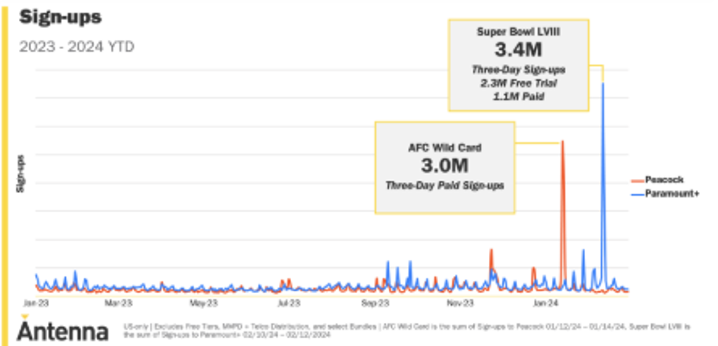
Last year, Paramount+ added 3.4 million new users in just a three-day window for broadcasting Super Bowl LVIII. But as these tentpole moments grow in importance, so does a critical shift in consumer behavior that marketers should not ignore.
Streaming audiences are moving from passive viewing to active management. Rather than committing to platforms long-term, consumers are optimizing their access around major sports moments, giving rise to three key behaviors:
Consumers are no longer maintaining always-on subscriptions. Instead, they are treating streaming like a seasonal activity. They activate services for high-value windows, like the “Legendary February” sports calendar, and cancel as soon as the final whistle blows. This intentional cycling challenges the assumption that tentpole events automatically translate into durable subscriber growth.
With major sports rights fragmented across platforms (Amazon, Netflix, and Peacock all holding different “exclusive” windows), fans are increasingly forced to juggle multiple services to follow a single season or sports moment. The result is mounting subscription fatigue. In many cases, consumers opt out entirely, choosing to skip an event rather than navigate yet another app, login, or paywall.
The value for consumers is no longer judged solely by the price, but by the utility. For many, Peacock is moving from a “nice-to-have” entertainment app to a “must-have” sports hub. However, this loyalty is fragile. If the platform fails to convert sports-driven audiences into sustained engagement with scripted or reality content within the sports window, the value proposition vanishes as soon as the sports schedule concludes.
This year, Peacock will likely see a surge of +3 million subscriptions as it carries both the Super Bowl LX and the Winter Olympics. But ultimately there won’t be much longevity after the events have finished. Most new users will fall off by the end of the month, and by mid-May, subscriptions will normalize, erasing the majority of any boost these events provided.
1. Stay audience first. Follow the viewers but don’t commit to any one single media partner.
2. Plan for volatility. There will be ebbs and flows in platform subscription rate/audience reach. Build flexible media plans where your brand can connect with audiences leading up to and during these major sports moments.
3. Maximize the spikes, but don’t rely on them. If your campaigns directly align with these events, maximize the subscriber surge to extend your message beyond the big event window. Make sure to design buys that work across the pre-event, in-event, and post-event cycle. The next era of sports streaming will belong to marketers and brands that treat audience behavior as dynamic, not fixed. Consumers are signaling exactly how they want to watch: on their terms, on their timeline, and with minimal friction. Brands that flex with this flow will be the ones that win the high-value reach game.